Top Safety Compliance Trends for Industrial Construction
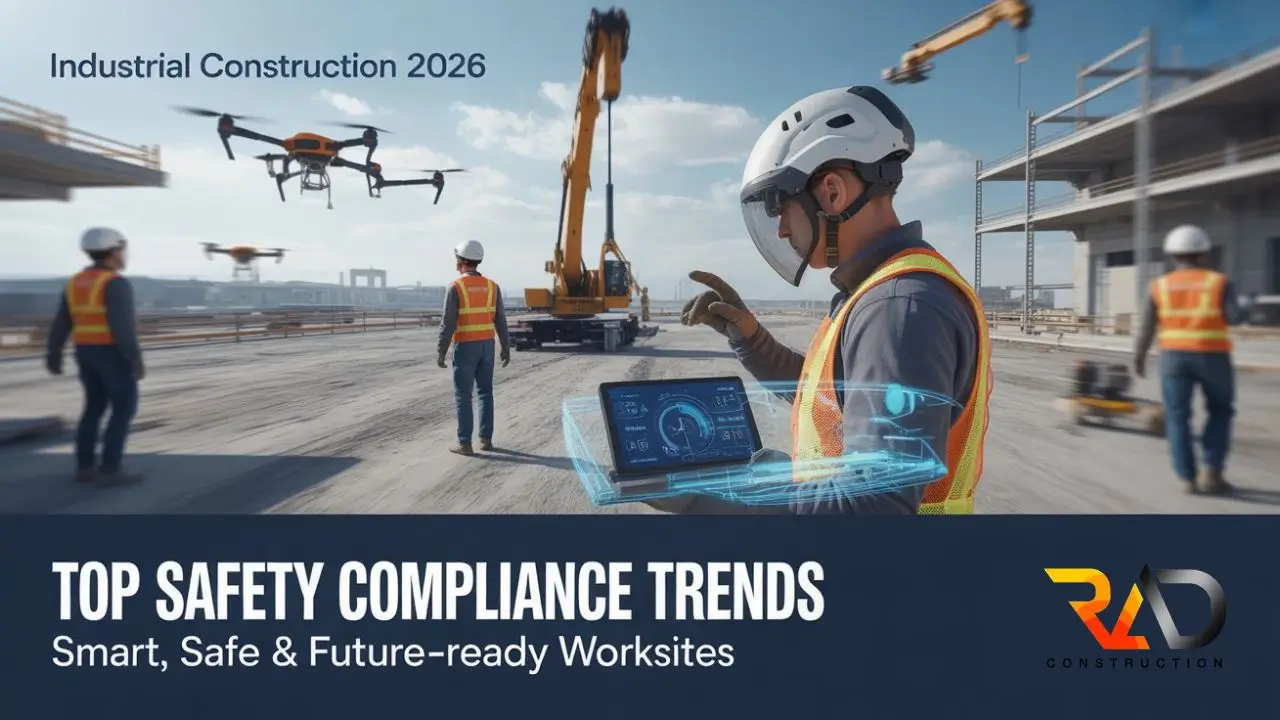
Safety Compliance Trends
Industrial construction is evolving faster than ever. As new technologies, stricter regulations, and global sustainability goals reshape the sector, safety compliance has become a top priority for every contractor and developer. In 2026, industrial construction will not just focus on building efficiency — it will focus on building safely, smartly, and sustainably.
Whether you manage large-scale industrial building and civil works or operate manufacturing plants, understanding upcoming safety trends is essential for legal compliance, worker well-being, and brand reputation.
1. AI-Driven Safety Monitoring Systems
By 2026, Artificial Intelligence (AI) is expected to monitor construction sites in real-time. AI-powered cameras and IoT sensors can detect unsafe behaviors such as workers without helmets, unsafe scaffolding, or unauthorized zones. These systems automatically alert supervisors before an incident occurs.
- AI image recognition tracks PPE compliance.
- Automated alerts reduce response time for safety officers.
- Predictive analytics identify potential accident hotspots.
According to a U.S. OSHA report, AI-based compliance tools have already reduced accidents by over 25% in pilot projects worldwide.
2. Smart PPE (Personal Protective Equipment)
Gone are the days of basic helmets and gloves. The new generation of PPE is smart, connected, and responsive. In 2026, expect to see:
- Smart Helmets with built-in sensors that track fatigue, temperature, and heart rate.
- Bluetooth-connected safety vests that alert when entering restricted areas.
- AR-based visors projecting hazard alerts in the worker’s field of view.
These devices integrate directly with central dashboards, allowing supervisors to monitor on-site safety in real time — a key advantage for large industrial projects.
3. Global Standardization of Safety Codes
International collaboration is driving new consistency in construction safety standards. ISO, OSHA, and the Indian National Building Code are all aligning their compliance frameworks for a unified global benchmark. This simplifies multi-country projects and promotes better safety awareness among contractors.
- Adoption of ISO 45001:2018 for occupational health and safety.
- Integration of digital documentation for easier audits.
- Mandatory training certifications for all on-site personnel.
Companies that proactively adopt these standards gain credibility and smoother project approvals.
4. Robotics and Automation for High-Risk Tasks
In industrial construction, many accidents happen in confined spaces, heights, or chemical zones. Automation will play a major role in minimizing human exposure.
- Robotic welding and inspection drones handle dangerous tasks.
- Remote-operated machinery reduces manpower in hazardous zones.
- AI-assisted load monitoring prevents crane overloading.
These innovations not only increase safety but also enhance precision and project speed — a win-win for compliance and productivity.
5. Environmental and Worker Safety Integration
In 2026, safety will extend beyond physical injury prevention — environmental safety will be part of compliance frameworks. This includes dust control, noise reduction, and safe waste disposal, ensuring that sites are both worker-safe and eco-safe.
Expect new mandates on:
- On-site air quality sensors integrated with IoT dashboards.
- Zero-liquid discharge (ZLD) systems for construction wastewater.
- Noise-level monitoring to comply with CPCB guidelines.
These practices are already being adopted by progressive firms like RADIN INFRASTRUCTURE SOLUTIONS PRIVATE LIMITED in their industrial and civil work projects across India.
6. Digital Twin Technology for Risk Simulation
Digital Twin technology allows engineers to create a virtual model of the construction site. Before execution, every process — from crane lifting to foundation laying — can be simulated to detect potential risks.
In 2026, construction companies will use Digital Twins to:
- Simulate high-risk operations safely in a digital environment.
- Train workers using AR/VR scenarios.
- Reduce human error and insurance costs.
This digital-first approach will become a mandatory standard in government and industrial tenders.
7. Real-Time Compliance Dashboards
Compliance in 2026 will be data-driven. Smart dashboards will combine data from sensors, wearables, and cameras to give supervisors a 360° view of safety in real time. These platforms can:
- Generate automatic compliance reports.
- Send alerts for missing PPE or unsafe site conditions.
- Integrate with cloud-based audit tools for instant access.
Many construction management software solutions are now offering Safety-as-a-Service features to simplify this process.
8. Mental Health and Workforce Well-being Policies
Safety compliance isn’t limited to physical protection. Modern policies now emphasize worker mental health and stress management. Fatigue, overwork, and anxiety directly contribute to on-site accidents. By 2026, expect more industrial firms to include:
- Mandatory mental health sessions for construction staff.
- AI-based workload balancing tools.
- Flexible shift patterns to reduce fatigue.
Holistic worker well-being will become a measurable compliance metric in audits.
9. Drone-Based Safety Audits
Drones are transforming industrial site inspections. By 2026, drones equipped with LiDAR and 360° cameras will conduct routine safety audits — faster, safer, and with higher accuracy.
- Identify structural weaknesses or unsafe scaffolding.
- Capture visual evidence for compliance reports.
- Monitor restricted zones without human entry.
Drones save time and reduce the risk of manual inspection accidents, especially in tall structures and chemical plant zones.
10. Transparent Reporting and ESG Compliance
Finally, transparency will define the new era of safety. Environmental, Social, and Governance (ESG) reporting will become mandatory for all industrial projects. This means safety data, worker protection records, and compliance audits must be publicly accessible or shared with stakeholders.
- Blockchain-based data storage for tamper-proof reports.
- Third-party safety certifications.
- Annual sustainability and safety compliance reports.
These measures not only build investor trust but also align companies with global ESG goals.
Conclusion
The industrial construction landscape in 2026 will be shaped by technology, data, and responsibility. Safety will no longer be a compliance checkbox—it will be a culture driven by innovation and empathy. Companies that adopt these emerging trends early will not only meet legal standards but also earn a long-term competitive edge.
At RADIN INFRASTRUCTURE SOLUTIONS PRIVATE LIMITED, we integrate smart safety systems and compliance solutions in all our industrial building and civil works projects, ensuring that safety, sustainability, and precision go hand in hand. To learn how we can implement these standards for your upcoming project, contact us today.
For further insights on construction safety and innovation:
For more information, Visit here
Are You Located In Any Of These Cities?
Coimbatore
Peelamedu, Thudiyalur, Saravanampatti, Ondipudur, Vedapatti, Vadavalli, Kovaipudur, Press Colony, Sulur, Singanallur, Kinathukadavu, Periyanaickenpalayam, Malumichampatti, Kovilpalayam, Chettipalayam, Coimbatore Aerodrome, Coimbatore Collectorate, Coimbatore Courts, Coimbatore Industrial Estate, Coimbatore North, Coimbatore Railway Station, Coimbatore Race Course, Ganapathy, Ukadam, Jothipuram, Kaniyur, Karamadai, Kunniyamuthur, Kurudampalayam, Madathukulam, Maruthamalai, Nanjundapuram, Narasimhanaickenpalyam, Negamam, NGGO Colony, Othakalmandapam, Pannimade, Pappanaicken Pudur, Pappanaickenpalayam, Puliyakulam, Ram Nagar-Coimbatore, Ramanathapuram, Ratnapuri, Redfields, Saibaba Colony, Irugur, Sidhapudur, Sowripalayam, Tatabad, Thadagam, Thondamuthur, Uppilipalayam, Vellalore C.B.E, Velandipalayam, Chinniampalayam, Neelambur, Coimbatore Central, Kavundampalyam, Madukkarai, Mettupalayam
Chennai
Adyar, Alandur, Anna Nagar, Ashok Nagar, Besant Nagar, Chintadripet, Egmore, George Town, Guindy, Kilpauk, Kotturpuram, Mylapore, Nandanam, Nungambakkam, Parrys, Purasaiwakkam, Royapettah, Saidapet, T Nagar, Triplicane, Vadapalani, Vepery, Velachery, West Mambalam, and Zamin Pallavaram.
Tiruppur
Tiruppur, Dharapuram, Palladam, Udumalaipeta, Avinashi, Kangayam.