Role of Civil Engineering Services in Large-Scale Industrial Projects
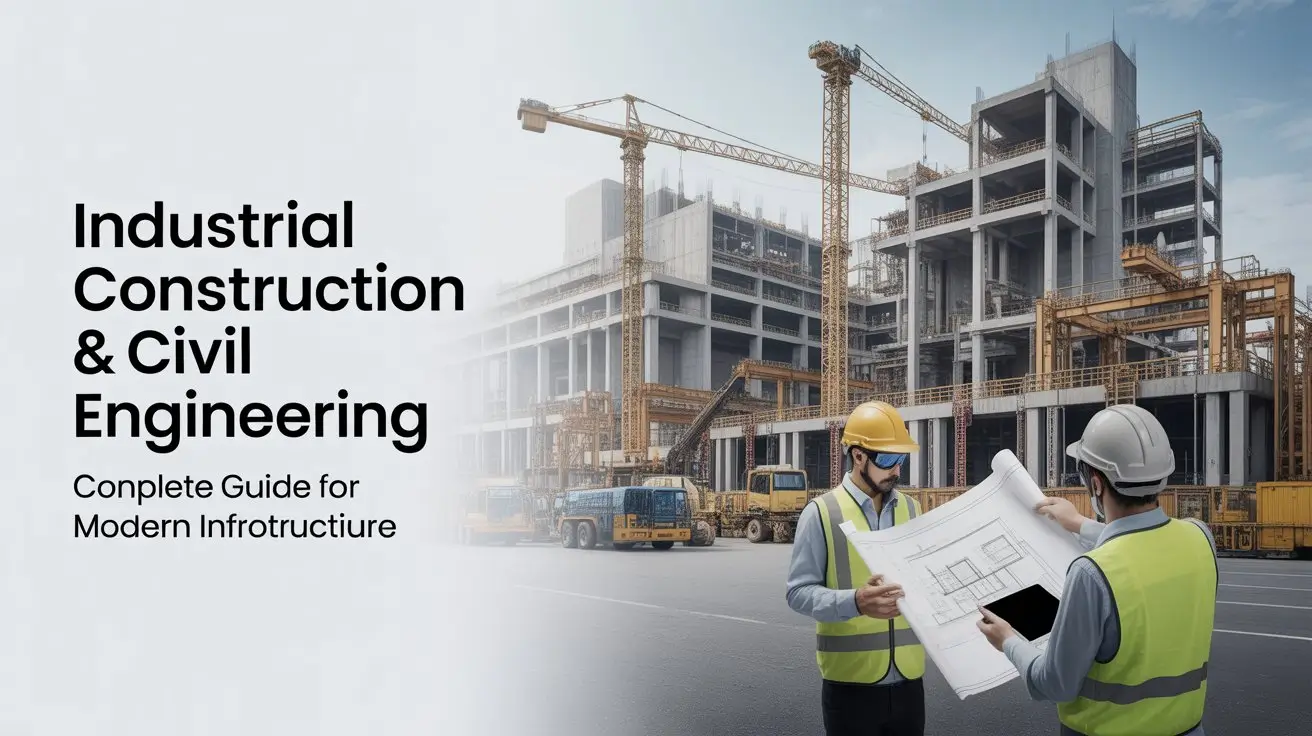
Large-scale industrial projects are complex, high-investment developments that demand precision, durability, and long-term performance. From manufacturing plants and warehouses to power facilities and processing units, the success of such projects depends heavily on one core discipline: civil engineering services.
Civil engineering is not just about concrete and steel. It is the backbone that ensures industrial facilities are safe, functional, compliant, and capable of handling operational stress for decades. In this guide, we explore the role of civil engineering services in large-scale industrial projects, why they are critical, and how professional execution directly impacts cost, safety, and lifecycle performance.
Companies like RADIN INFRASTRUCTURE SOLUTIONS PRIVATE LIMITED provide integrated civil engineering and industrial construction services tailored to Indian climate conditions and regulatory requirements.
What Are Civil Engineering Services in Industrial Construction?
Civil engineering services in industrial construction involve the planning, design coordination, construction, and maintenance of structural and infrastructural elements that support industrial operations.
Unlike residential or commercial projects, industrial civil engineering focuses on:
- High load-bearing capacity
- Long-span structures
- Heavy machinery foundations
- Resistance to vibration, heat, chemicals, and moisture
- Operational efficiency and safety compliance
These services ensure that the industrial structure performs reliably under continuous operational stress.
Why Civil Engineering Is Critical for Large-Scale Industrial Projects
Large industrial facilities operate under demanding conditions. Any failure in foundation, structural elements, or drainage can cause downtime, financial loss, or safety hazards.
Civil engineering services play a critical role by:
- Ensuring structural stability under heavy loads
- Preventing settlement, cracks, and long-term deformation
- Managing water flow, drainage, and waterproofing
- Supporting future expansion and scalability
- Complying with Indian Standards (IS codes, NBC)
According to the Bureau of Indian Standards (BIS), improper civil engineering design is one of the leading causes of industrial building distress.
Key Civil Engineering Services in Industrial Projects
Professional civil engineering services cover multiple stages of an industrial project lifecycle.
1. Site Development and Land Preparation
Every industrial project begins with site analysis and preparation. Civil engineers assess soil conditions, topography, drainage patterns, and environmental factors before construction begins.
This stage includes:
- Soil investigation and bearing capacity analysis
- Land grading and leveling
- Excavation and earthwork
- Temporary access roads and site infrastructure
Proper site preparation prevents future settlement issues and foundation failure.
2. Foundation Engineering
Foundations are the most critical element in large-scale industrial projects. They must support not only the building but also heavy machinery, dynamic loads, and vibration.
Civil engineering services design and execute:
- Isolated, combined, raft, and pile foundations
- Machine foundations for high-vibration equipment
- Load transfer systems for uneven soil conditions
A poorly designed foundation can lead to misalignment of machinery, cracks, or complete structural failure.
3. Structural RCC Works
Reinforced Cement Concrete (RCC) structures form the skeleton of industrial buildings. Civil engineers ensure that columns, beams, slabs, and retaining walls are designed for long-term durability.
Structural civil works include:
- RCC frames and slabs
- Shear walls for lateral stability
- Retaining walls and compound walls
- Underground structures and basements
At RADIN INFRASTRUCTURE SOLUTIONS PRIVATE LIMITED, RCC execution follows strict quality control protocols to meet industrial safety standards.
4. Industrial Flooring Systems
Industrial floors experience constant traffic, heavy loads, vibration, and chemical exposure. Civil engineering services ensure floors are designed for the intended use.
This includes:
- High-strength concrete flooring
- Jointless or joint-controlled slab systems
- Expansion joint planning and treatment
- Chemical-resistant and abrasion-resistant finishes
Proper flooring design reduces maintenance costs and improves operational safety.
5. Drainage, Stormwater, and Water Management
Water is one of the biggest threats to industrial structures. Poor drainage can lead to flooding, erosion, and foundation damage.
Civil engineering services design:
- Surface and subsurface drainage systems
- Stormwater management networks
- Rainwater harvesting structures
- Effluent and wastewater channels
Efficient water management is especially critical in Indian monsoon conditions.
6. Waterproofing and Structural Protection
Large-scale industrial projects require comprehensive waterproofing strategies. Civil engineers integrate waterproofing into foundations, basements, roofs, and joints.
Key areas include:
- Basement and foundation waterproofing
- Terrace and roof protection
- Expansion joint treatment
- Chemical and moisture barriers
You can explore more about these solutions on the RADIN INFRASTRUCTURE SOLUTIONS PRIVATE LIMITED services page.
Role of Civil Engineering in Safety and Compliance
Safety is non-negotiable in industrial projects. Civil engineering services ensure compliance with:
- National Building Code (NBC)
- IS codes for concrete, steel, and foundations
- Seismic zone requirements
- Fire safety and evacuation planning
Reports from Construction Week India highlight that projects with strong civil engineering oversight experience fewer safety incidents and delays.
Supporting Industrial Expansion and Future Growth
Large-scale industrial projects rarely remain static. Expansion, additional machinery, and layout changes are common.
Civil engineering services plan for:
- Future load capacity
- Structural extensions
- Additional floors or sheds
- Minimal disruption during expansion
This forward-thinking approach protects the long-term investment.
Common Challenges in Industrial Civil Engineering
- Complex soil conditions
- Coordination between multiple disciplines
- Time-sensitive project schedules
- Cost control and material optimization
- Working around active industrial operations
Experienced civil engineering teams mitigate these challenges through planning, testing, and quality control.
Why Choosing the Right Civil Engineering Partner Matters
The success of a large-scale industrial project depends on the expertise of the civil engineering contractor. The right partner offers:
- Industrial project experience
- Qualified engineers and site teams
- Strict quality and safety protocols
- Transparent cost and timeline management
- Post-construction support and maintenance
Contact RADIN INFRASTRUCTURE SOLUTIONS PRIVATE LIMITED to discuss your industrial civil engineering requirements with a professional team.
Conclusion
Civil engineering services are the foundation of every successful large-scale industrial project. From site development and foundations to structural systems, waterproofing, and future expansion, civil engineering ensures that industrial facilities are safe, durable, and operationally efficient.
By working with experienced professionals like RADIN INFRASTRUCTURE SOLUTIONS PRIVATE LIMITED, industrial clients can reduce risk, control costs, and build infrastructure that supports long-term growth.
If you are planning a new industrial project or upgrading existing facilities, investing in expert civil engineering services is not optional—it is essential.
Are You Located In Any Of These Cities?
Coimbatore
Peelamedu, Thudiyalur, Saravanampatti, Ondipudur, Vedapatti, Vadavalli, Kovaipudur, Press Colony, Sulur, Singanallur, Kinathukadavu, Periyanaickenpalayam, Malumichampatti, Kovilpalayam, Chettipalayam, Coimbatore Aerodrome, Coimbatore Collectorate, Coimbatore Courts, Coimbatore Industrial Estate, Coimbatore North, Coimbatore Railway Station, Coimbatore Race Course, Ganapathy, Ukadam, Jothipuram, Kaniyur, Karamadai, Kunniyamuthur, Kurudampalayam, Madathukulam, Maruthamalai, Nanjundapuram, Narasimhanaickenpalyam, Negamam, NGGO Colony, Othakalmandapam, Pannimade, Pappanaicken Pudur, Pappanaickenpalayam, Puliyakulam, Ram Nagar-Coimbatore, Ramanathapuram, Ratnapuri, Redfields, Saibaba Colony, Irugur, Sidhapudur, Sowripalayam, Tatabad, Thadagam, Thondamuthur, Uppilipalayam, Vellalore C.B.E, Velandipalayam, Chinniampalayam, Neelambur, Coimbatore Central, Kavundampalyam, Madukkarai, Mettupalayam
Chennai
Adyar, Alandur, Anna Nagar, Ashok Nagar, Besant Nagar, Chintadripet, Egmore, George Town, Guindy, Kilpauk, Kotturpuram, Mylapore, Nandanam, Nungambakkam, Parrys, Purasaiwakkam, Royapettah, Saidapet, T Nagar, Triplicane, Vadapalani, Vepery, Velachery, West Mambalam, and Zamin Pallavaram.
Tiruppur
Tiruppur, Dharapuram, Palladam, Udumalaipeta, Avinashi, Kangayam.