Role of AI & Technology in Residential Building Design
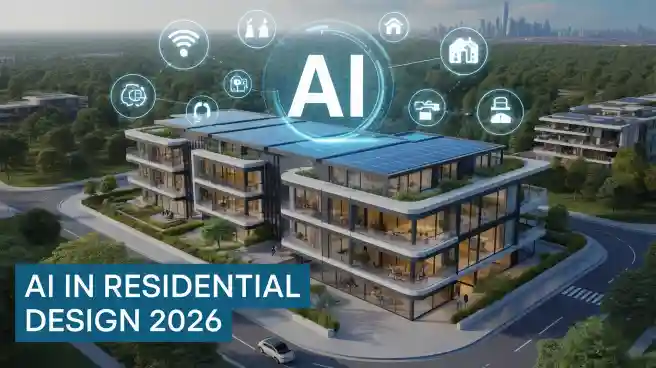
Intro for AI in Residential Design
The future of housing is being reshaped by artificial intelligence (AI) and advanced technology. From AI in residential architecture to smart home AI 2026 innovations, modern building design is evolving rapidly. Homeowners, architects, and real estate developers are now focusing on creating residential spaces that are not only visually stunning but also highly intelligent, sustainable, and adaptive.
In this blog, we will explore how AI and technology are transforming residential building design, what trends to expect in the coming years, and why this matters for both urban and rural housing projects.
1. The Rise of AI in Residential Architecture
Traditionally, architecture has been guided by creativity, culture, and structural requirements. But today, AI in residential architecture is revolutionizing the way homes are designed. Artificial intelligence can analyze massive amounts of data—from climate conditions to neighborhood patterns—to create optimized, customized designs for homeowners.
For example, AI tools can generate floor plans that maximize natural light, airflow, and energy efficiency. This not only improves comfort but also reduces long-term costs. According to ArchDaily, AI-driven architecture is one of the fastest-growing fields in building design worldwide.
2. Smart Home AI in 2026
The integration of smart home AI 2026 technologies is another defining trend. Homes are becoming intelligent ecosystems where devices communicate seamlessly. AI-powered systems can learn homeowner preferences and adjust lighting, temperature, and security settings automatically.
- Voice-Controlled Systems: AI assistants like Alexa and Google Home are evolving into full-fledged home managers.
- Predictive Energy Management: AI analyzes usage patterns to reduce energy bills and carbon footprint.
- Smart Security: Facial recognition, biometric access, and AI-based surveillance enhance safety.
These innovations make residential living more convenient and efficient. For a deeper dive into smart home solutions, check our related guide on Smart Home Design Trends.

3. Future Technology in Housing: What’s Next?
Beyond automation, future technology in housing is pushing the limits of creativity and sustainability. AI is being combined with the Internet of Things (IoT), augmented reality (AR), and robotics to create futuristic living spaces.
3.1 AI-Powered Construction
Construction companies are using AI to manage projects, reduce errors, and predict maintenance issues. Automated machines and robots can speed up construction while maintaining precision, making housing more affordable.
3.2 Digital Twins for Residential Buildings
Digital twin technology allows architects to create a virtual replica of a home before it is built. This helps in analyzing performance, energy usage, and even future repair needs. It’s a major breakthrough in residential building design.
3.3 Personalized Living with AI
Imagine a home that adapts to your lifestyle. AI can personalize everything—from mood lighting and soundscapes to interior layouts—based on daily routines. This level of customization makes living spaces more human-centric and enjoyable.
4. Sustainability Through AI-Driven Housing
Sustainability is no longer an option—it’s a necessity. AI and technology are helping create eco-friendly residential buildings by:
- Optimizing energy consumption with smart grids
- Managing water usage through AI-driven sensors
- Recommending eco-friendly construction materials
- Integrating solar, wind, and renewable energy sources
This aligns with global initiatives like the UN Sustainable Development Goals, making residential projects both modern and responsible.
5. Challenges of AI in Residential Design
While the benefits are clear, there are also challenges in adopting AI in residential architecture:
- High Initial Costs: AI-based systems and smart devices can be expensive to implement.
- Privacy Concerns: With increased automation, data protection becomes crucial.
- Skill Gap: Not all architects and builders are trained in AI-powered design tools.
However, as technology advances, costs are decreasing and awareness is growing—making adoption easier for homeowners and developers.
6. The Future of Residential Building Design
Looking ahead, the role of AI in residential building design will only expand. We can expect:
- Fully automated smart homes
- Self-sustaining eco-houses powered by AI
- Mixed-use AI-driven residential communities
- AI-guided renovations and retrofitting for older buildings
For homeowners, this means smarter investments. For architects and builders, it means staying competitive by embracing technology-driven innovations.
Conclusion
The future of residential building design lies at the intersection of AI, smart technology, and sustainability. Whether it’s AI in residential architecture, smart home AI 2026, or broader future technology in housing, these innovations are transforming how we live. By adopting these trends early, homeowners and developers can enjoy greater efficiency, comfort, and long-term value.
👉 Want to explore more? Check out our detailed post on Residential Building Design Trends 2026.
Residential buildings are no longer just structures—they are intelligent living ecosystems powered by AI.
For more information, Visit here
Are You Located In Any Of These Cities?
Coimbatore
Peelamedu, Thudiyalur, Saravanampatti, Ondipudur, Vedapatti, Vadavalli, Kovaipudur, Press Colony, Sulur, Singanallur, Kinathukadavu, Periyanaickenpalayam, Malumichampatti, Kovilpalayam, Chettipalayam, Coimbatore Aerodrome, Coimbatore Collectorate, Coimbatore Courts, Coimbatore Industrial Estate, Coimbatore North, Coimbatore Railway Station, Coimbatore Race Course, Ganapathy, Ukadam, Jothipuram, Kaniyur, Karamadai, Kunniyamuthur, Kurudampalayam, Madathukulam, Maruthamalai, Nanjundapuram, Narasimhanaickenpalyam, Negamam, NGGO Colony, Othakalmandapam, Pannimade, Pappanaicken Pudur, Pappanaickenpalayam, Puliyakulam, Ram Nagar-Coimbatore, Ramanathapuram, Ratnapuri, Redfields, Saibaba Colony, Irugur, Sidhapudur, Sowripalayam, Tatabad, Thadagam, Thondamuthur, Uppilipalayam, Vellalore C.B.E, Velandipalayam, Chinniampalayam, Neelambur, Coimbatore Central, Kavundampalyam, Madukkarai, Mettupalayam
Chennai
Adyar, Alandur, Anna Nagar, Ashok Nagar, Besant Nagar, Chintadripet, Egmore, George Town, Guindy, Kilpauk, Kotturpuram, Mylapore, Nandanam, Nungambakkam, Parrys, Purasaiwakkam, Royapettah, Saidapet, T Nagar, Triplicane, Vadapalani, Vepery, Velachery, West Mambalam, and Zamin Pallavaram.
Tiruppur
Tiruppur, Dharapuram, Palladam, Udumalaipeta, Avinashi, Kangayam.