What Is Expansion Joint Treatment? Complete Guide for 2026
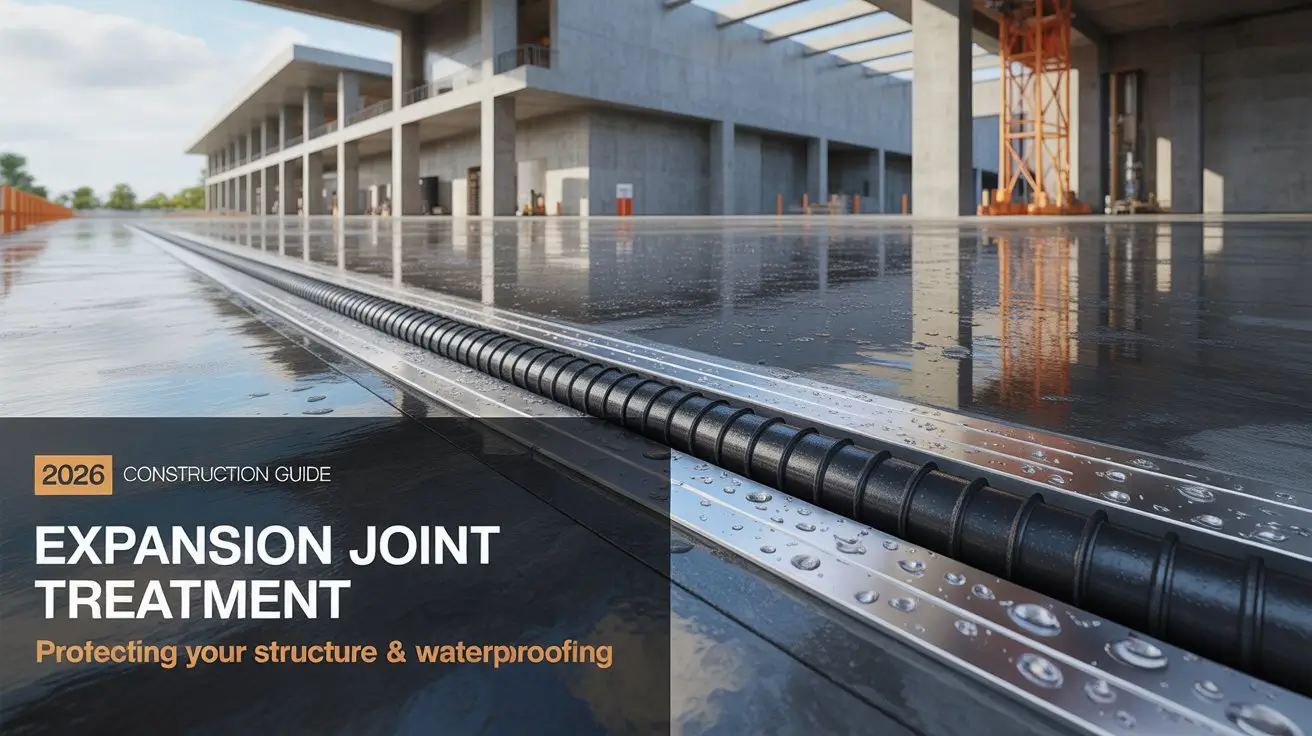
In large buildings, industrial structures, bridges, roofs and slabs, you’ll often see discreet gaps or transitions between parts of the structure. These gaps are called expansion joints (sometimes also movement joints). They exist to accommodate movement caused by temperature changes, live loads, settlement, seismic forces or differential material behaviour.
But simply having an expansion joint isn’t enough. What makes the difference is how well that gap is treated—sealed, protected and integrated into the structural and waterproofing systems. That’s what we call expansion joint treatment. In this guide (2026 edition) you will learn: what it is, why it matters in the Indian context, materials and methods, installation best-practices, case-studies, future trends and how to choose the right contractor (for example, us at RADIN INFRASTRUCTURE SOLUTIONS PRIVATE LIMITED, experts in industrial building & civil works).
Why Expansion Joint Treatment Matters
Expansion joints are critical because if they are ignored or improperly treated, the consequences are serious:
- Cracking, separation of slabs or walls, visible gaps.
- Water ingress and leaks through the joint opening, leading to dampness, corrosion or structural damage.
- Failure of waterproofing, especially on roofs, terraces or podiums where joints traverse the waterproofing membrane.
- Reduced life of structural components and higher maintenance cost.
In India’s environment—with heavy monsoon rain, humid conditions, recurring temperature variation and elevated seismic risk in certain zones—the proper treatment of expansion joints in roofs, basements, industrial slabs and façade expansions is **non-negotiable**.
What Is Expansion Joint Treatment? A Definition
Expansion joint treatment is the process of installing, sealing, protecting and integrating expansion joints in a structure so that they can safely accommodate movement (expansion and contraction, shear movement, vertical displacement) while maintaining structural integrity, waterproofing, air-seal, fire-rating and aesthetic finish.
In essence, the treatment typically involves:
- Preparation of the joint gap (cleaning, removal of debris, checking geometry).
- Installation of a backer rod, filler material or profile that allows movement.
- Application of a flexible sealant or membrane that bonds to joint faces and accommodates movement.
- Protection of the sealant or membrane with cover plates, metal profiles or expansion joint covers in high-traffic areas. :
- Waterproofing integration – ensuring that the waterproof layer is continuous across the joint and the joint treatment does not become a leak path.
Where Are Expansion Joints Found?
Expansion joints are located based on the structural layout and movement expectations, including:
- Large slab spans in buildings and industrial floors.
- Where different structural blocks meet (e.g., building additions, horizontal wings).
- Roof-terrace junctions and podium decks where waterproofing is critical.
- Façade or wall intersections, building expansions, mechanical or equipment zones.
Types of Movements an Expansion Joint Must Handle
When designing or treating an expansion joint, it is crucial to identify the type(s) of movement expected:
- Thermal expansion and contraction – As concrete or steel warms or cools, lengths and volumes change.
- Seismic movement or ground settlement – Horizontal, vertical or shear movement in building foundations or slabs.
- Live load and deflection – Floors or roofs under heavy dynamic loads like forklifts or machinery may shift.
- Differential movement between different materials or structural systems (e.g., concrete to steel, or old part to new part).
Materials & Systems Used in Expansion Joint Treatment
Here are some commonly used materials and systems in 2026:
Flexible Sealants & Membranes
Modern expansion joint sealants are often polyurethane based, low-modulus (to allow large movement), moisture-curing or designed for high humidity environments.
Joint Fillers and Backer Rods
A backer rod (often closed cell foam) placed in the joint gap ensures correct depth of sealant and allows the sealant to flex properly. Prior cleaning and primer may be necessary.
Cover Plates and Movement Profiles
In high-traffic zones (car parks, industrial floors, corridors) expansion joints may be treated with metal cover plates (aluminium, stainless steel) or elastomeric movement profiles to carry traffic while allowing movement.
Waterproofing Integration Systems
The expansion joint gap may cross waterproofing membranes (on roofs, terraces, basements). Special tapes or membranes that bond to the sealing system are used so that waterproofing is not interrupted.
Step-by-Step Process for Treatment
Here is a reliable workflow for expansion joint treatment:
- Inspection & planning: Assess joint width, expected movement, previous damage, waterproofing continuity, traffic loading, environmental exposure.
- Cleaning/preparation: Remove old sealant, debris, dust, loose concrete, ensure sides of joint are sound. Provide primer if required.
- Install backer rod/filler: Depth of sealant is controlled; backer rod is compressed slightly to allow correct sealant profile.
- Apply sealant or membrane: Insert flexible sealant according to manufacturer’s specification, tooling the sealant correctly, avoiding air pockets.
- Protection/cover plate installation: Where required install cover plates, metal profiles, or traffic-rated movement systems.
- Waterproofing continuity check: Ensure the waterproofing membrane overlaps appropriately or the joint treatment is integrated so no water ingress path exists.
- Curing & final inspection: Allow sealant to cure as per specification, perform movement tests, water-tightness checks, document for maintenance schedule.
Why India Specific Factors Matter
For Indian buildings and industrial works the key context includes:
- Monsoon impact: High rainfall and water ingress risk make waterproofing across joints critical.
- Temperature fluctuations: In many regions the concrete through afternoon to night shifts temperature significantly, causing larger movement than temperate zone designs consider.
- Industrial traffic loading: Factories, warehouses often have forklifts or heavy equipment crossing expansion joints – requiring robust treatment. A posted case noted jerk and damage because of joint failure.
- Seismic zones: Many Indian states lie in moderate to high seismic zones. Expansion joint systems must accommodate lateral and vertical movements accordingly.
Case Study / Project Example
At RADIN INFRASTRUCTURE SOLUTIONS PRIVATE LIMITED we recently completed the expansion joint treatment for an industrial building in Tamil Nadu. The building had a 15 m span slab with expansion joints every 12m. Key details:
- Joint width pre-treatment: 35 mm at mid-temperature.
- Installed low-modulus polyurethane sealant rated for 50% movement accommodation per side.
- Installed aluminium cover plates in vehicle-traffic zone.
- Integrated the roof waterproofing membrane across the joint so that no seepage path existed.
- Using wrong sealant depth or filler profile: Improper proportions reduce movement capacity leading to failure.
- Ignoring waterproofing continuity: A sealant alone is fine, but if the waterproofing membrane ends at the joint and isn’t integrated, it becomes a leak path.
- Choosing cheap cover plates or no traffic-rated treatment: In warehouses heavy equipment may physically damage the joint system unless designed accordingly.
- Delaying joint maintenance: Movement and environmental exposure degrade materials over time—regular inspection is vital.
- Regular inspections every 1-2 years—look for sealant degradation, cracking, spalling, movement beyond expected range.
- Clean and replace sealant if deformation or adhesion loss is visible.
- Check waterproofing membrane performance especially after heavy rainfall or roof water ponding.
- Maintain records, movement logs, and ensure trending of joint widening or displacement.
- Smart materials: Sealants that show visual indicators of fatigue, sensor-integrated joints that monitor movement and report remotely.
- Hybrid systems: Combining elastomeric sealants with nano-coatings or intelligent membranes for longer life and better performance in harsh climates.
- Prefabricated modular joint systems: For high-rise and industrial floors where rapid installation is needed.
- Integrated BIM & digital twin monitoring: Expansion joint geometry and behaviour modelled in the building information system, enabling predictive maintenance.
- Do they perform a joint movement analysis and specify sealant system based on movement capacity? (e.g., 25 % or 50 % movement accommodation)
- Have they integrated waterproofing across the joint—not just the sealant?
- Do they provide traffic-rated solutions (cover plates, profiles) if the joint is in a vehicle zone?
- Can they provide maintenance and life-cycle documentation? Are they certified for movement joint systems?
- Treatment of Expansion Joints – Chowgule Construction Chemicals
- Expansion Joint Systems for Buildings – Alchimica
The result: zero leak incidents in the first 18 months of monsoons, no visible cracking around the joint, and traffic loading passing smoothly.
Common Mistakes and How to Avoid Them
Maintenance & Life-Cycle Considerations
Expansion joint treatment is not “install and forget”. Over the life of building (20+ years), consider:
Future Trends for 2026 and Beyond
Looking ahead, expansion joint treatment in 2026 will include:
How to Choose the Right Treatment Partner
If you are planning expansion joint treatment in a new building or renovating existing structure, here are questions to ask your contractor:
At RADIN INFRASTRUCTURE SOLUTIONS PRIVATE LIMITED we specialise in expansion joint treatment as part of our industrial building & civil works services. From design specification to material selection, installation and maintenance, we provide an end-to-end solution.
Conclusion
Expansion joint treatment is a foundational but often under-appreciated part of building and infrastructure construction. For 2026, with increasing structural spans, heavier loads, higher expectations of durability and waterproofing, it becomes more critical than ever.
If designed and executed properly, expansion joint treatment protects your building from early damage, water ingress, cracking and costly maintenance. If neglected, even a small gap can lead to major structural or waterproofing failures.
For professional services, advanced materials and robust warranty in India, explore our Expansion & Joint Treatment services or contact RADIN INFRASTRUCTURE SOLUTIONS PRIVATE LIMITED today.
Further reading:
For more information, Visit here
Are You Located In Any Of These Cities?
Coimbatore
Peelamedu, Thudiyalur, Saravanampatti, Ondipudur, Vedapatti, Vadavalli, Kovaipudur, Press Colony, Sulur, Singanallur, Kinathukadavu, Periyanaickenpalayam, Malumichampatti, Kovilpalayam, Chettipalayam, Coimbatore Aerodrome, Coimbatore Collectorate, Coimbatore Courts, Coimbatore Industrial Estate, Coimbatore North, Coimbatore Railway Station, Coimbatore Race Course, Ganapathy, Ukadam, Jothipuram, Kaniyur, Karamadai, Kunniyamuthur, Kurudampalayam, Madathukulam, Maruthamalai, Nanjundapuram, Narasimhanaickenpalyam, Negamam, NGGO Colony, Othakalmandapam, Pannimade, Pappanaicken Pudur, Pappanaickenpalayam, Puliyakulam, Ram Nagar-Coimbatore, Ramanathapuram, Ratnapuri, Redfields, Saibaba Colony, Irugur, Sidhapudur, Sowripalayam, Tatabad, Thadagam, Thondamuthur, Uppilipalayam, Vellalore C.B.E, Velandipalayam, Chinniampalayam, Neelambur, Coimbatore Central, Kavundampalyam, Madukkarai, Mettupalayam
Chennai
Adyar, Alandur, Anna Nagar, Ashok Nagar, Besant Nagar, Chintadripet, Egmore, George Town, Guindy, Kilpauk, Kotturpuram, Mylapore, Nandanam, Nungambakkam, Parrys, Purasaiwakkam, Royapettah, Saidapet, T Nagar, Triplicane, Vadapalani, Vepery, Velachery, West Mambalam, and Zamin Pallavaram.
Tiruppur
Tiruppur, Dharapuram, Palladam, Udumalaipeta, Avinashi, Kangayam.