Critical Waterproofing Mistakes Made During Construction 2026
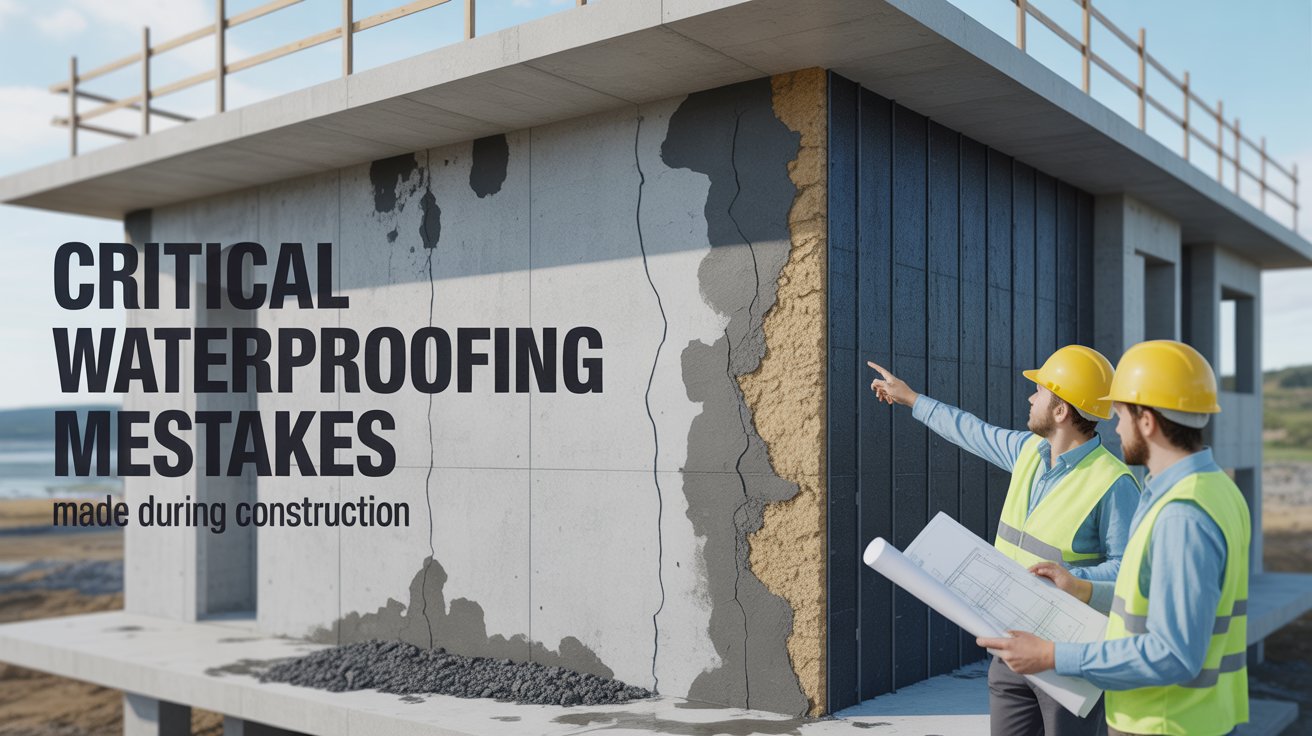
Waterproofing is one of the most misunderstood and underestimated aspects of construction. Many buildings that look perfect at handover start showing leakage, dampness, and cracks within a few years. In most cases, the problem is not poor materials or heavy rainfall — it is critical waterproofing mistakes made during construction.
Waterproofing is not a cosmetic layer applied at the end of a project. It is a systematic process that must be planned, executed, and protected at every construction stage. When this process is rushed, ignored, or poorly coordinated, waterproofing fails — often permanently.
This article explains the most common and critical waterproofing mistakes during construction, why they happen, and how professionals prevent them. The goal is not just to fix leaks, but to help builders, engineers, and property owners avoid failure before it begins.
Why Waterproofing Failures Start During Construction
Most people assume waterproofing problems appear later due to aging or weather exposure. In reality, over 80% of waterproofing failures originate during construction itself.
The reasons are simple:
- Waterproofing is treated as an optional add-on, not a core system
- Decisions are made without understanding moisture behavior
- Execution is rushed to meet project timelines
- Different trades work without coordination
Once concrete hardens and finishes are completed, correcting these mistakes becomes expensive and invasive.
Mistake 1: Treating Waterproofing as a Post-Construction Activity
One of the biggest waterproofing mistakes is assuming it can be “done later.” Waterproofing must be integrated into the construction process, not applied after completion.
Examples of this mistake include:
- Skipping slab waterproofing before tile laying
- Ignoring basement waterproofing until seepage appears
- Applying coatings over finished surfaces instead of treating the structure
Waterproofing is most effective when applied at the structural stage, before finishes hide defects. Once tiles, plaster, or paint are applied, access to the problem area is lost.
Mistake 2: No Waterproofing Design or Planning
Waterproofing is often executed without a design strategy. This is a critical error.
Effective waterproofing requires planning based on:
- Building usage and occupancy
- Exposure to rain, groundwater, or humidity
- Structural movement and expansion joints
- Drainage slopes and water flow paths
Without a waterproofing plan, contractors rely on generic methods that rarely address actual moisture behavior.
Mistake 3: Ignoring Slope and Drainage Design
Waterproofing cannot compensate for poor slope design.
Flat or improperly sloped surfaces cause water stagnation, which increases hydrostatic pressure and accelerates membrane failure.
Common drainage-related mistakes include:
- Insufficient slope on terraces and balconies
- Improper placement of rainwater outlets
- Blocked or undersized drain pipes
Good waterproofing always works with gravity, not against it.
Mistake 4: Using the Wrong Waterproofing System
There is no single waterproofing solution suitable for all areas.
A common mistake is using the same waterproofing material for:
- Terraces
- Bathrooms
- Basements
- Water tanks
Each area experiences different stresses — UV exposure, constant water immersion, pressure, or movement. Using the wrong system leads to premature failure.
Professional waterproofing selection considers flexibility, bonding strength, chemical resistance, and expected movement.
Mistake 5: Poor Surface Preparation
Even the best waterproofing materials fail if applied on poorly prepared surfaces.
Common surface preparation errors include:
- Applying membranes over dusty or oily concrete
- Ignoring honeycombs, cracks, or voids
- Skipping primers where required
Waterproofing systems rely on adhesion. If the surface is weak, the system detaches under moisture pressure.
Mistake 6: Ignoring Construction Joints and Expansion Joints
Joints are the most vulnerable points in any structure.
Many waterproofing failures occur because:
- Construction joints are left untreated
- Expansion joints are sealed rigidly
- Movement is not accommodated
Concrete expands and contracts. Waterproofing systems must move with it. Rigid treatments crack, allowing water to enter.
Mistake 7: Inadequate Curing and Protection
Waterproofing materials require proper curing time. Rushing this process is a critical mistake.
Typical errors include:
- Allowing foot traffic too early
- Placing tiles before membrane curing
- Exposure to sunlight or rain during curing
Incomplete curing weakens the system permanently.
Mistake 8: Poor Coordination Between Trades
Waterproofing often fails due to damage caused after application.
Examples include:
- Electricians puncturing membranes
- Plumbers cutting treated areas
- Tile contractors removing protective layers
Without coordination and supervision, waterproofing integrity is compromised.
Mistake 9: Skipping Quality Checks and Testing
Many projects skip water testing to save time.
This is dangerous.
Flood tests and inspection checks reveal defects early, when repairs are still easy. Once finishes are installed, testing becomes impossible.
Mistake 10: Assuming New Buildings Don’t Need Waterproofing Maintenance
Waterproofing is not a lifetime guarantee.
All systems require periodic inspection and maintenance. Ignoring this leads to gradual failure.
Preventive inspection ensures minor issues are fixed before becoming major structural problems.
How Professionals Avoid Waterproofing Mistakes
Professional waterproofing follows a disciplined process:
- Waterproofing design integrated with construction planning
- Area-specific system selection
- Surface inspection and preparation
- Joint detailing and movement accommodation
- Quality checks and curing control
This approach significantly reduces long-term repair costs and building deterioration.
Why Correct Waterproofing Builds Long-Term Value
Correct waterproofing:
- Extends building lifespan
- Protects structural integrity
- Improves indoor air quality
- Reduces maintenance expenses
- Preserves property value
According to Construction Week India, early waterproofing planning reduces lifecycle maintenance costs by over 40%.
Conclusion
Most waterproofing failures are not caused by climate or materials — they are caused by decisions made during construction.
Understanding and avoiding these critical waterproofing mistakes ensures buildings remain dry, durable, and safe for decades. Waterproofing is not an afterthought. It is an engineering responsibility.
If you are planning a project or facing recurring leakage issues, professional waterproofing consultation during construction is the most cost-effective decision you can make.
For expert guidance and proven waterproofing execution, contact RADIN INFRASTRUCTURE SOLUTIONS PRIVATE LIMITED and protect your building the right way.
- Indian Green Building Council – Sustainable Building Practices
- Houzz India – Home Renovation Inspirations
- Construction World India – Industry Insights
Final Thoughts
Water damage is not just about appearance – it’s about the safety and durability of your home. By recognizing the early signs and calling experts like RADIN INFRASTRUCTURE SOLUTIONS PRIVATE LIMITED, you can save money and ensure peace of mind.
Don’t wait until a small damp patch turns into a major problem. Contact RADIN INFRASTRUCTURE SOLUTIONS PRIVATE LIMITED today for trusted water damage repair in Coimbatore.
Are You Located In Any Of These Cities?
Coimbatore
Peelamedu, Thudiyalur, Saravanampatti, Ondipudur, Vedapatti, Vadavalli, Kovaipudur, Press Colony, Sulur, Singanallur, Kinathukadavu, Periyanaickenpalayam, Malumichampatti, Kovilpalayam, Chettipalayam, Coimbatore Aerodrome, Coimbatore Collectorate, Coimbatore Courts, Coimbatore Industrial Estate, Coimbatore North, Coimbatore Railway Station, Coimbatore Race Course, Ganapathy, Ukadam, Jothipuram, Kaniyur, Karamadai, Kunniyamuthur, Kurudampalayam, Madathukulam, Maruthamalai, Nanjundapuram, Narasimhanaickenpalyam, Negamam, NGGO Colony, Othakalmandapam, Pannimade, Pappanaicken Pudur, Pappanaickenpalayam, Puliyakulam, Ram Nagar-Coimbatore, Ramanathapuram, Ratnapuri, Redfields, Saibaba Colony, Irugur, Sidhapudur, Sowripalayam, Tatabad, Thadagam, Thondamuthur, Uppilipalayam, Vellalore C.B.E, Velandipalayam, Chinniampalayam, Neelambur, Coimbatore Central, Kavundampalyam, Madukkarai, Mettupalayam
Chennai
Adyar, Alandur, Anna Nagar, Ashok Nagar, Besant Nagar, Chintadripet, Egmore, George Town, Guindy, Kilpauk, Kotturpuram, Mylapore, Nandanam, Nungambakkam, Parrys, Purasaiwakkam, Royapettah, Saidapet, T Nagar, Triplicane, Vadapalani, Vepery, Velachery, West Mambalam, and Zamin Pallavaram.
Tiruppur
Tiruppur, Dharapuram, Palladam, Udumalaipeta, Avinashi, Kangayam.