Building Expansion: How to Do It Safely Without Damaging the Structure
Advice from RADIN INFRASTRUCTURE SOLUTIONS PRIVATE LIMITED — Residential, Industrial & Civil Works experts in Coimbatore
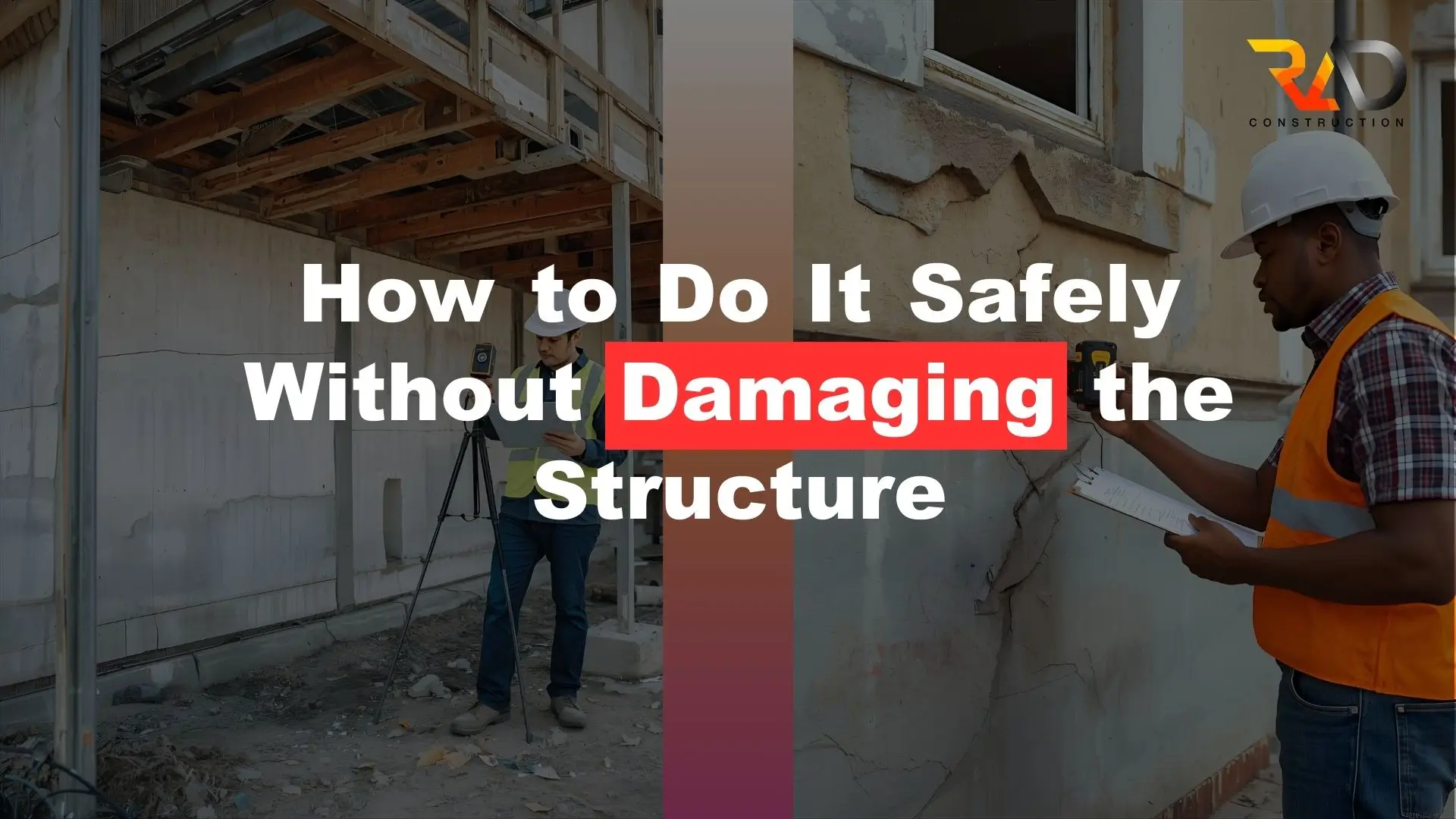
Why safety matters in every building expansion
Adding space to a building — whether a new room, floor, or warehouse extension — is an exciting way to increase value and utility. But a poorly planned expansion can cause serious structural issues, cracks, waterproofing problems and long-term maintenance headaches. This guide explains how to expand your house safely and preserve the strength of your building while meeting legal and design requirements.
1. Start with a structural safety audit
Before any work begins, commission a building expansion structural safety assessment by a qualified structural engineer. The audit checks foundation capacity, column/beam strength, soil bearing, and existing damage. Without this step, additions can overload foundations or cause settlement — the most common causes of post-expansion cracking.
Tip: Ask for a written report with load calculations and recommended reinforcement so your contractor (or RADIN INFRASTRUCTURE SOLUTIONS PRIVATE LIMITED) can prepare accurate plans and budgets.
2. Obtain permits & follow local codes
Home addition permits and safety are not optional in many municipalities. Local authorities require plans, clearances, and compliance with building codes. Securing permits protects you legally and ensures the work follows safety standards.
In Coimbatore and across India, permit requirements vary by ward and building type — always check with your local municipal office before starting construction.
3. Design for structural integrity — plan, don't guess
Good design is more than aesthetics. Extension plans and structural integrity go hand-in-hand. Consider load paths (how loads move to the foundation), continuity of beams and slabs, and connections between old and new structures. If you are adding a floor, you may need to reinforce beams, jack up walls, or retrofit columns.
Use detailed drawings (architectural + structural) so the contractor follows defined steps instead of improvising.
4. Expansion joints — the unsung heroes
One of the most overlooked technical aspects is the expansion joint importance in building expansion. Expansion joints accommodate thermal movement, shrinkage and differential settlement between old and new parts. Without them, your building will develop long cracks where materials move at different rates.
Plan joint locations with your engineer, and use appropriate sealants and joint covers to keep water out and ensure durability.
5. Waterproofing & damp-proofing at junctions
Interface areas — where the new structure meets the old — are vulnerable to leaks. A reliable waterproofing strategy prevents problems such as damp walls, terrace leakage, or corroded reinforcement. Make waterproofing an early part of the scope rather than a finish-stage afterthought.
RADIN INFRASTRUCTURE SOLUTIONS PRIVATE LIMITED integrates waterproofing with expansion work to avoid rework and long-term water damage.
6. Choose the right contractor — experience matters
Hiring skilled professionals is crucial. Look for contractors who have handled similar projects and can provide:
- References and portfolio of expansion projects
- Clear contract terms and phased schedules
- Insurance and safety plans
- Coordination with structural engineers and local authorities
If you need a trusted partner, RADIN INFRASTRUCTURE SOLUTIONS PRIVATE LIMITED's residential building and expansion & joint treatment teams work closely with engineers to deliver safe, certified expansions.
7. Construction best practices to avoid damage
During execution, ensure the contractor follows these safe-building practices:
- Phased demolition and shoring to protect existing structure
- Use proper curing times and material compatibility checks
- Monitor vibrations and loads from heavy equipment
- Protect adjoining finishes from water and dust
Regular on-site inspections by the engineer reduce surprises and allow corrective action before minor issues grow.
8. Cost planning & contingency
Unexpected repairs are common during expansions. Maintain a contingency budget (typically 10–20%) for discovered issues such as deteriorated concrete, corroded rebar, or unforeseen utility relocations. Transparent estimates and change-order procedures keep your project on track and prevent disputes.
9. Post-expansion maintenance & monitoring
After completion, monitor cracks, water ingress and finishes for the first 12–24 months. Timely maintenance of expansion joints, sealants and waterproofing will preserve structural integrity and save money long-term.
For eco-friendly and sustainable practices, check out the Indian Green Building Council guidelines.
Conclusion — Expand confidently with RADIN INFRASTRUCTURE SOLUTIONS PRIVATE LIMITED
Building expansion need not be risky. By prioritising a structural safety audit, securing permits, planning expansion joints, integrating waterproofing, and hiring experienced contractors you can expand your home or facility safely and confidently. Contact RADIN INFRASTRUCTURE SOLUTIONS PRIVATE LIMITED for a consultation on safe expansion work in Coimbatore — we specialise in residential, industrial & civil expansions, joint treatment and end-to-end project management.
Are You Located In Any Of These Cities?
Coimbatore
Peelamedu, Thudiyalur, Saravanampatti, Ondipudur, Vedapatti, Vadavalli, Kovaipudur, Press Colony, Sulur, Singanallur, Kinathukadavu, Periyanaickenpalayam, Malumichampatti, Kovilpalayam, Chettipalayam, Coimbatore Aerodrome, Coimbatore Collectorate, Coimbatore Courts, Coimbatore Industrial Estate, Coimbatore North, Coimbatore Railway Station, Coimbatore Race Course, Ganapathy, Ukadam, Jothipuram, Kaniyur, Karamadai, Kunniyamuthur, Kurudampalayam, Madathukulam, Maruthamalai, Nanjundapuram, Narasimhanaickenpalyam, Negamam, NGGO Colony, Othakalmandapam, Pannimade, Pappanaicken Pudur, Pappanaickenpalayam, Puliyakulam, Ram Nagar-Coimbatore, Ramanathapuram, Ratnapuri, Redfields, Saibaba Colony, Irugur, Sidhapudur, Sowripalayam, Tatabad, Thadagam, Thondamuthur, Uppilipalayam, Vellalore C.B.E, Velandipalayam, Chinniampalayam, Neelambur, Coimbatore Central, Kavundampalyam, Madukkarai, Mettupalayam
Chennai
Adyar, Alandur, Anna Nagar, Ashok Nagar, Besant Nagar, Chintadripet, Egmore, George Town, Guindy, Kilpauk, Kotturpuram, Mylapore, Nandanam, Nungambakkam, Parrys, Purasaiwakkam, Royapettah, Saidapet, T Nagar, Triplicane, Vadapalani, Vepery, Velachery, West Mambalam, and Zamin Pallavaram.
Tiruppur
Tiruppur, Dharapuram, Palladam, Udumalaipeta, Avinashi, Kangayam.